

Popular
-
 Speaker Stands
Original price was: KSh 33.00.KSh 22.00Current price is: KSh 22.00.
Speaker Stands
Original price was: KSh 33.00.KSh 22.00Current price is: KSh 22.00.
-
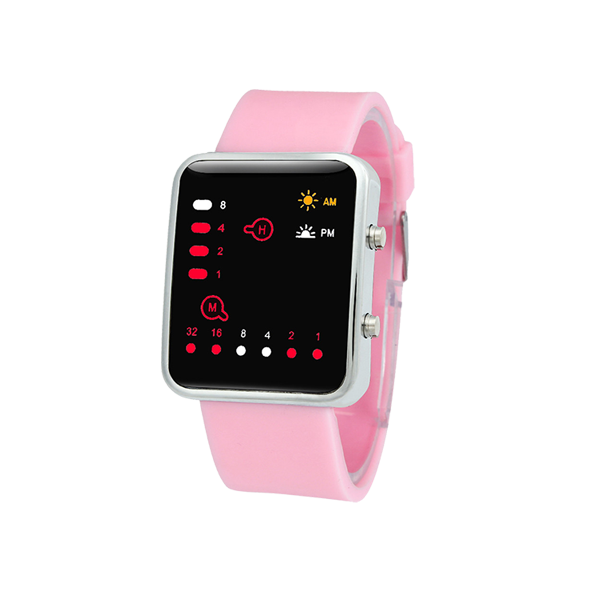 Smart Watch - Yellow
KSh 50.00
Smart Watch - Yellow
KSh 50.00
-
 Smart Watch
Original price was: KSh 78.00.KSh 65.00Current price is: KSh 65.00.
Smart Watch
Original price was: KSh 78.00.KSh 65.00Current price is: KSh 65.00.
-
 CCTV Camera
KSh 39.00
CCTV Camera
KSh 39.00
-
 Laptop
KSh 84.00
Laptop
KSh 84.00

A user deposits 1 ETH and $2,000 USDC into an Uniswap v3 liquidity pool on Ethereum, receives LP tokens in return, and sets it aside to accumulate fees. Weeks later, ETH has risen to $3,000. The user checks their LP token balance in Rabby Wallet—still showing the same number of tokens—and assumes the position is performing well. In reality, the position has suffered impermanent loss. The pool has rebalanced, the user now holds less ETH and more USDC than they initially deposited, and the notional value of those assets at current market prices is lower than if they had simply held the original coins. Rabby displays the LP tokens accurately. It shows connected DeFi protocol details, enables smart contract interaction, and provides readable transaction summaries. But it cannot warn about impermanent loss because that risk emerges from market movement after the deposit is complete—a feature of the mathematical relationship between pool prices and holdings, not a property that exists on-chain before the user enters the position.
Rabby’s architecture as a self-custodial EVM wallet focuses on real-time transaction safety and asset display. It excels at showing what assets are held and what risks a transaction poses before signing. It cannot retroactively analyze a completed deposit and flag the direction of price movement that would have created losses. More fundamentally, impermanent loss is not a discrete on-chain risk that a wallet can detect the same way it flags a suspicious approval or an unusual contract call. It is a consequence of how liquidity pools work—a continuous mathematical relationship that only becomes visible after the fact, when LP token value is compared to what the underlying assets would be worth if held separately. Understanding why Rabby cannot provide this warning, and why LP token valuations often mislead users into thinking they are winning when they are losing, separates informed participation in yield farming from costly accidents.

Why wallet detection of impermanent loss is mathematically unfeasible
Impermanent loss occurs because a constant-product automated market maker (AMM) maintains a price curve by adjusting the ratio of assets in the pool. When one asset appreciates, the pool holds less of it and more of the other. An LP who deposits equal values of ETH and USDC will, if ETH rises, end up holding a smaller fraction of ETH and a larger fraction of USDC. The portfolio becomes rebalanced toward the asset that fell in price—a mechanical feature of how the pool maintains liquidity at all price points.
For a wallet like Rabby to warn about impermanent loss, it would need to predict future price movement. It would have to know that ETH will rise, that this price movement will trigger rebalancing, and that the LP will experience losses. Rabby has no access to future prices, no ability to predict which asset will appreciate, and no mechanism to distinguish between “this is a safe pool with stable assets” and “this pool contains assets that are about to diverge sharply.” Even if Rabby monitored current price data from an oracle or DEX, predicting impermanent loss would require forecasting—a function that belongs to the user’s own analysis, not to a wallet.
The distinction matters because it clarifies what wallets can and cannot do. Rabby can display current asset prices, flag transactions that spend an unusually high amount of allowance, warn against interactions with unverified contracts, and show readable descriptions of what a transaction will do before signing. These are static checks. Impermanent loss is a dynamic risk that emerges over time as prices move. A wallet cannot warn about something it cannot predict, and a properly designed wallet should not make up warnings based on arbitrary heuristics.
Some wallets or DeFi dashboards display “estimated” or “projected” impermanent loss based on historical volatility. These estimates are often misleading because they suggest a level of certainty that does not exist. Two pools with identical current composition and fee tier can have completely different impermanent loss outcomes depending on which asset appreciates and by how much. A wallet can make users aware that impermanent loss exists as a concept, but it cannot reliably predict whether a specific position will experience it.
How LP token prices obscure the actual value of pooled assets
An LP token represents a claim on a share of the pool’s liquidity and accumulated fees. If a user deposits into a Uniswap pool and receives 100 LP tokens, those tokens entitle them to withdraw some amount of the two underlying assets plus their proportional share of trading fees. The problem is that LP token prices are often quoted in ways that disguise value deterioration.
Many DeFi dashboards and wallet display mechanisms show LP token balance without calculating the current composition of the underlying assets. A user sees “100 LP tokens” and may cross-reference this with their purchase price or initial deposit value to estimate position worth. But the composition has likely changed. If ETH has appreciated since deposit, the pool now contains fewer ETH and more USDC. The 100 tokens still represent a valid claim on the pool, but the mix of assets is different. If the user did not intend to be long USDC and short ETH, this rebalancing represents an unrealized loss.
LP token valuation in Rabby and other wallets typically relies on either a quoted price (if the token trades on a secondary market) or a calculation of the underlying assets divided by total supply. Neither method automatically accounts for impermanent loss relative to the user’s entry point. Rabby may correctly display that 100 LP tokens are worth $X at current prices, but it cannot know what the user initially deposited or whether the current composition represents a gain or loss relative to holding the underlying assets separately.
The deeper issue is that LP token valuation requires referencing the moment of deposit. A user who deposits 1 ETH and 1,000 USDC at an ETH price of $2,000 is essentially selling a synthetic short position: as ETH appreciates, they hold less of it. If ETH then trades at $3,000, their proportional holdings have rebalanced, and the value of their LP tokens may be less than $3,000 + $1,000 = $4,000. The gap is impermanent loss. Rabby cannot calculate this because it does not know when the deposit occurred or what the prices were at that moment. That historical information is not stored on-chain in a form that a wallet can easily access.
The fee accrual illusion and why it masks losses
Liquidity pools accumulate trading fees from every swap that passes through them. An LP earns a proportional share. For a Uniswap v3 pool charging 0.3 percent, each swap contributes 0.3 percent of the swap amount to the pool. These fees are real and belong to LPs. However, fee accrual is often presented as a gain that offsets impermanent loss, when in fact fees and IL are separate and sometimes work at cross purposes.
Consider a volatile pool with high trading activity. The pool may charge high fees because traders are swapping frequently, but the same volatility that drives frequent swaps is likely to drive large impermanent losses. An LP in a 1 percent fee pool for a volatile pair might accumulate 2 percent in fees over a month while experiencing 5 percent impermanent loss, resulting in a net 3 percent loss. Displaying the 2 percent fee accrual without calculating the impermanent loss creates an illusion of profitability.
Rabby displays LP tokens and can show the token balance increasing as fees are reinvested or distributed, depending on the pool’s design. But displaying fee accrual without context encourages users to focus on the positive number rather than the complete position. A user checking their LP balance in Rabby every few days might see the token amount slowly increase and conclude the position is profitable without realizing that the underlying asset composition has shifted unfavorably due to impermanent loss that exceeds fee income.
Tier-1 DeFi dashboards (not wallets) can be more helpful here because they allow users to input a deposit date and calculate impermanent loss relative to a point in time. Rabby, by design, focuses on current state and security rather than historical analysis. This is appropriate for a self-custodial wallet; the tradeoff is that users must use separate tools to analyze LP position performance.
Concentrated liquidity and narrow ranges amplify hidden losses
Uniswap v3 introduced concentrated liquidity, allowing LPs to specify a price range. Instead of providing liquidity across all prices from zero to infinity, an LP might choose to provide liquidity only between $1,900 and $2,100 if they believe ETH will trade in that range. Concentrated positions earn higher fees per dollar deployed but experience impermanent loss much faster when price moves outside the range.
Once price exits the specified range, a concentrated LP position becomes almost entirely one asset. An LP providing liquidity in the $1,900 to $2,100 range, if ETH trades at $3,000, will hold almost exclusively USDC. Impermanent loss is severe and occurs rapidly. Worse, the LP earns no more fees because the pool never executes swaps within their range. They are locked in a losing position with no income to offset the loss until they decide to rebalance by widening the range or exiting.
Rabby can display concentrated LP positions accurately but cannot warn that the chosen range is about to be breached. A user might receive confirmation that their range order is active, see their LP tokens displayed, and continue about their day until they check the position days later and discover ETH has moved far beyond their range and their position is nearly entirely USDC. The mathematical reality exists before the wallet displays it, but the wallet has no forward-looking information about price movement.
The lesson for users is that concentrated liquidity requires active management or a decision tolerance for impermanent loss. Passive entry and forget strategies that might be acceptable for a broad Uniswap v2 pool are dangerous for concentrated positions. Rabby’s strength in displaying current state and enabling smart contract interaction is necessary but not sufficient for risk management in concentrated pools.
When yield farming actually loses money despite displayed gains
Some DeFi protocols offer reward tokens on top of trading fee income to incentivize liquidity provision. A user might deposit into a pool and earn both trading fees and governance tokens or incentive tokens. This dual income stream is often presented as an attractive yield. However, users frequently discover that the position returns a loss when the rewards are sold or when the protocol scales back incentives.
The core issue is that reward tokens are typically worth less than the impermanent loss incurred. A protocol offers 100 percent annual rewards to attract liquidity to a volatile pair. An LP enters, experiences 30 percent impermanent loss in the first month due to price movement, but receives reward tokens worth 15 percent of their deposit. The math is negative: they have 85 percent of their starting capital remaining. Even with the rewards, they are down 15 percent.
Rabby displays both the LP tokens and any reward tokens accumulated. It shows the wallet holder’s NFT and token balances with clarity. But presenting these as separate line items can create a false impression of profitability. A user sees “100 LP tokens” + “50 reward tokens” and may not immediately recognize that the combination is worth less than their original deposit. Rabby could theoretically display a “total position value” metric, but this would require knowing the user’s original entry price—information that exists only in the user’s transaction history or external records, not on-chain.
For users attempting to evaluate yield farming returns, the correct approach is to calculate total position value (underlying assets plus rewards) at entry and compare it to the same calculation at the current date. Rabby can support this by displaying readable transaction history and current balances; for deeper analysis about DeFi protocol risks, users should consult specialized analytics tools alongside Rabby’s core wallet functions. The wallet has limitations by design, and accepting those limitations is part of informed participation.
Rabby’s role in transaction transparency and what it can prevent
While Rabby cannot prevent impermanent loss, it provides substantial protections at the point of entry. When a user initiates a transaction to deposit into a liquidity pool via Rabby, the wallet displays the transaction details: which tokens will be sent, amounts, destination contract, and expected output. This transparency is a critical safeguard against approving the wrong amount, interacting with a counterfeit contract, or accidentally sending funds to an attacker.
Rabby’s smart contract interaction review examines the function being called and provides a human-readable summary. For a Uniswap liquidity deposit, it might display: “Mint liquidity on Uniswap V3 Ethereum: Deposit 1 ETH and 2000 USDC in the 2200-2600 range.” This prevents the class of loss that comes from misunderstanding what a transaction does. It does not prevent the class of loss that comes from impermanent loss because impermanent loss is a consequence of correct execution, not failed execution.
Rabby also supports hardware wallets and multisignature configurations, allowing users to add additional security layers. For DeFi participation, these features reduce the risk of fund theft or unauthorized transactions. A user with a hardware wallet integrated via Rabby gains the security benefit of key isolation. The hardware wallet cannot prevent impermanent loss any more than Rabby can, but it reduces the risk of a compromised internet-connected device causing capital loss through malicious transactions.
Users evaluating Rabby’s fit for their DeFi activity should visit more information about the wallet’s supported networks and features. Rabby supports Ethereum and all EVM-compatible chains including Arbitrum, Optimism, Base, Polygon, and BNB Smart Chain, making it accessible for liquidity pools on any of these networks. The wallet’s nft wallet and portfolio display features allow users to track LP tokens alongside other assets, but users must separately monitor impermanent loss and portfolio composition using external tools or manual calculation.
Practical strategies to manage IL risk despite wallet limitations
Users cannot rely on Rabby to detect impermanent loss, so they must implement their own oversight. The simplest strategy is to use stablecoin pairs. A pool of USDC and USDT, two assets that trade near parity, experiences minimal impermanent loss because price divergence is constrained. Trading fees accumulate almost purely as profit. The tradeoff is that fee yields are lower because traders face less slippage and less reason to trade in stablecoin pairs.
A second strategy is to use Uniswap v2 or similar constant-product pools with broad (or unlimited) ranges. An LP in a v2 pool providing liquidity across all prices suffers impermanent loss more slowly than a concentrated v3 LP. The loss still occurs as price moves, but the LP continues earning fees at all prices, which provides ongoing income to offset some losses. This is a slower path to potential losses, suitable for users who expect moderate price movement.
A third strategy is to actively manage positions. An LP who monitors their position regularly and rebalances as prices move can prevent price from drifting far from their target range, reducing impermanent loss. This requires checking Rabby and other wallets often, watching price feeds, and executing rebalancing transactions—an actively managed approach suitable for users with sufficient attention and capital to justify transaction costs.
Documentation is critical. A user should record entry date, amounts, and prices for each LP position. Later, using a spreadsheet or external analytics tool, they can calculate realized impermanent loss. Rabby does not provide this calculation, but it can export transaction history and display current balances. Combining Rabby’s data with external analysis creates a complete picture of position performance. The wallet’s focus on security and transaction clarity is valuable; its limitation in historical analysis is not a flaw but a design choice. Users must choose tools appropriately.
The ecosystem gap between wallet display and risk awareness
Rabby represents a broader category of self-custodial wallets that prioritize real-time security and asset accuracy over complex analytics. This is the right tradeoff for a wallet because the core function is to protect keys and execute transactions correctly. Impermanent loss analysis requires context—entry prices, time, market conditions—that belongs to an external analytics layer, not embedded in transaction signing logic.
The gap creates a usability problem. Most users encounter Rabby or a similar wallet first, use it to participate in DeFi, and expect it to provide complete risk information. When it does not warn about impermanent loss, they may interpret this as a shortcoming rather than understanding it as a reflection of what wallets can reasonably do. Ecosystem education matters here. Users should expect wallets to show current state accurately and prevent transaction errors. They should expect external tools—DeFi dashboards, price tracking applications, portfolio analytics—to provide the historical context and forward-looking analysis that wallets cannot.
As DeFi matures, some of this analysis may shift. Tools that rely on on-chain data, user-provided input, or integration with historical price feeds could become standard alongside wallet software. Rabby’s open-source architecture and broad EVM support make it well-positioned to serve as a foundation for secure DeFi participation, but users must recognize that using Rabby for liquidity pool entry is only the beginning of due diligence. The wallet handles the transaction; the user handles the strategy and the consequences.
Frequently asked questions
Can Rabby Wallet warn me about impermanent loss before I deposit into a liquidity pool?
No. Impermanent loss is a consequence of price movement after deposit, not a risk that exists before the transaction is signed. Rabby can verify that the transaction will execute correctly and show you the pool parameters and amounts, but it cannot predict whether an asset will appreciate or depreciate. Detecting impermanent loss requires comparing your LP token value over time to what you would have earned holding the assets separately—analysis that belongs to external tools, not wallet software.
Why does my LP token balance appear profitable in Rabby when I’m actually losing money?
LP token valuations displayed in wallets calculate current token value based on pool composition and price, not your entry point. If your deposit composition has drifted due to impermanent loss, the current token value may be lower than what you originally deposited, even though the wallet displays an accurate current price. Fee accumulation can mask losses; you may earn trading fees while experiencing larger impermanent losses. Track your entry prices and recalculate position value manually or using an external analytics tool to see the true picture.
Does concentrated liquidity in Uniswap v3 eliminate or increase impermanent loss?
Concentrated liquidity increases impermanent loss risk. By providing liquidity only within a narrow price range, you earn higher fees per dollar deployed but experience much faster losses if price exits your range. Once price moves outside your range, you hold almost exclusively one asset and earn zero fees. Concentrated positions require active management; passive strategies work better with broad or unlimited ranges that continue earning fees as price moves.

Know Us

Neque viverra justo nec ultrices dui sapien eget. Gravida cum sociis natoque penatibus. Imperdiet proin fermentum leo vel orci porta non
Read More


Product Showcase





Leave a Reply