

Popular
-
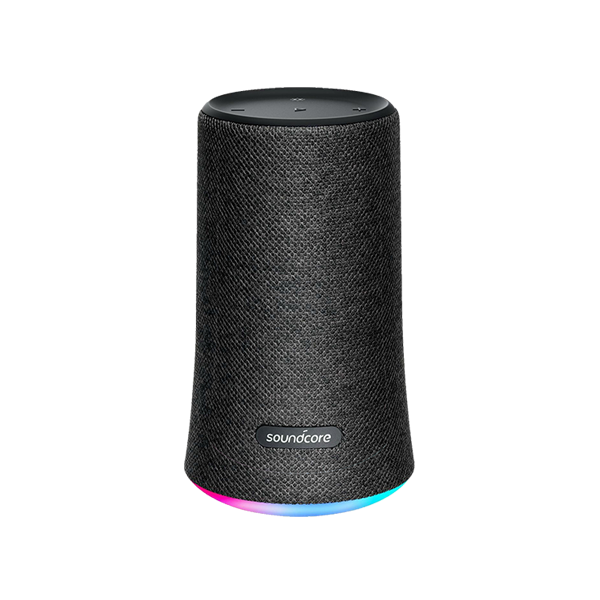 Speaker Stands
Original price was: KSh 33.00.KSh 22.00Current price is: KSh 22.00.
Speaker Stands
Original price was: KSh 33.00.KSh 22.00Current price is: KSh 22.00.
-
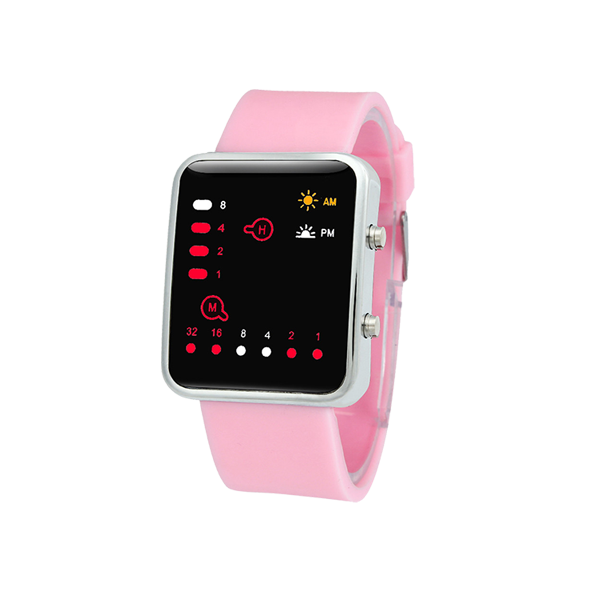 Smart Watch - Yellow
KSh 50.00
Smart Watch - Yellow
KSh 50.00
-
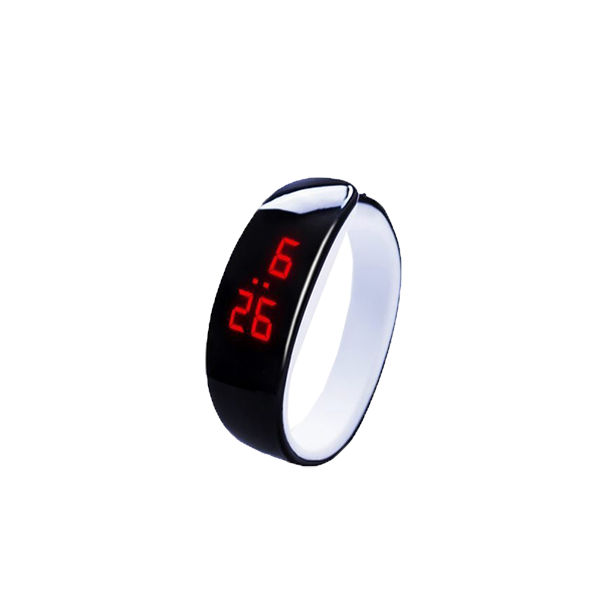 Smart Watch
Original price was: KSh 78.00.KSh 65.00Current price is: KSh 65.00.
Smart Watch
Original price was: KSh 78.00.KSh 65.00Current price is: KSh 65.00.
-
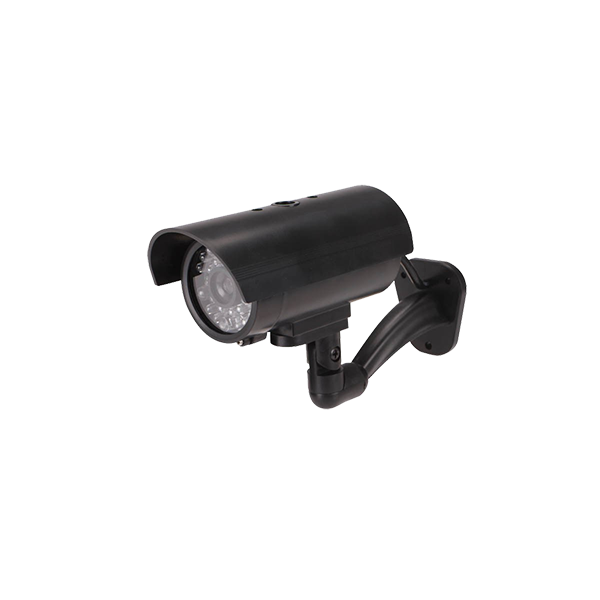 CCTV Camera
KSh 39.00
CCTV Camera
KSh 39.00
-
 Laptop
KSh 84.00
Laptop
KSh 84.00
Surprising fact to start: a single Solana transaction can touch dozens of accounts and token mints in under a second — which makes “watching a token” on Solana very different from watching one on older chains. That speed is part of Solana’s promise, but it also creates a distinct set of challenges when you want to track SPL tokens, verify NFT provenance, or audit token flows for a wallet or dApp.
This explainer walks through how SPL (Solana Program Library) tokens work at a mechanism level, why explorers and analytics tools are essential for both developers and end users, and what trade-offs you face when choosing a Solana NFT and token explorer. Ill give you a practical mental model for tracing tokens, the limits you should expect, and clear heuristics for picking the right tool and workflow.

How SPL tokens actually work — a mechanism-first view
SPL tokens are not special smart contracts the way ERC‑20s are on Ethereum; instead, they are accounts governed by the Solana runtime and a standard program (the token program). Each SPL token mint is an on-chain account that defines supply, decimals, and authority addresses. Individual token balances live in separate token accounts — lightweight accounts that belong to holders or programs and that reference a mint. That separation (mint vs. token account) is crucial to reason about when you trace an asset: the mint identifies the token class, the token account contains the balance for a specific owner.
Mechanically, a token transfer is an instruction invoking the SPL Token Program that moves lamport-equivalent state between token accounts and updates the ledger. Because accounts are explicit, an address can hold multiple token accounts for the same mint (useful for program wallets or custodial setups). For NFTs (non-fungible tokens built on SPL), the pattern is usually a mint with supply = 1 and a token account holding that single unit, often with an associated metadata account created by the Metaplex Metadata program. Understanding these actors — mint, token account, token program, and metadata program — is the first step in accurate auditing.
Why block explorers matter and what they must show
Block explorers translate raw transactions into human-readable events: which mints were touched, which token accounts changed, and which program instructions executed. But not all explorers are equal. A good Solana explorer should show:
– the mint and token account distinction clearly;
– program-level instruction decoding so you can see a transfer vs. an approved delegate vs. a freeze;
– associated metadata links for NFTs and the ability to follow provenance across token account moves; and
– APIs for programmatic access when you’re building or monitoring a service.
For many Solana users and developers, an immediate practical recommendation is to use an explorer that decodes SPL token instructions and exposes both mint and token account views. One such tool, widely used in the ecosystem and leading in API and analytics for Solana, is solscan, which integrates transaction decoding, token balances, and NFT metadata inspection into a single interface. That combination lowers the friction of going from suspicion (did a token move?) to answer (here’s which token account and which program instruction was executed).
Comparing explorers: decoding fidelity, latency, and data access
When choosing an explorer or analytics pipeline, weigh three trade-offs: decoding fidelity, data freshness (latency), and API access. Not every tool optimizes all three.
– Decoding fidelity: Some explorers attempt deep protocol-aware decoding (including Metaplex metadata, CPI — cross-program invocation — traces, and custom program logs). That’s invaluable for forensic work, but it requires continuous maintenance as programs evolve. If your work involves NFTs or specialized program flows, pick a tool that advertises explicit support for those programs.
– Latency: Solana’s high throughput means new blocks arrive fast. A light client or a simple RPC node can surface recent blocks quickly but might lack the enriched decoding of a full analytics pipeline. If real-time alerts are critical (e.g., monitoring hot wallets), prioritize low-latency feeds and complement them with periodic deep reconciliations.
– API access and rate limits: For automated monitoring, the API’s schema design matters. Look for endpoints that return token account deltas, mint-level splits, and decoded instructions. Check rate limits and pricing if you plan to scale.
Where the common mental models break down
Many users treat a wallet address alone as a sufficient proxy for “who holds this token.” On Solana that can mislead. Because token balances are stored in separate token accounts, a single user may spread holdings across multiple token accounts, wrapped SOL accounts, or program-controlled accounts. Similarly, NFTs often have both a token account and a metadata account with important provenance fields; ignoring metadata loses the narrative of a collection, creators, and royalties.
Another common error is assuming every transfer implies market activity. Many automated flows — staking programs, escrows, marketplace pings, and airdrop claims — generate token movements that are operational rather than economic. Decoding the transaction instructions is the only reliable way to separate “on-chain bookkeeping” from “open market transfer.”
Limitations and unresolved issues to watch
There are several boundary conditions to keep in mind. First, decoding depends on program transparency: custom programs with nonstandard instruction formats can be opaque to explorers until someone reverse-engineers them. Second, historical completeness can be an issue — not every archive node stores the same index layers, so deep historical queries sometimes require specialized datasets. Third, metadata is mutable in many NFT setups: a token’s metadata account can be updated by an authority, which means provenance is partly a governance question, not a fixed record.
Finally, privacy and wallet clustering are active trade-offs. Solana’s account model makes it easy to see relationships between addresses (shared authorities, related token accounts), but any clustering heuristics are probabilistic and can be wrong. For compliance or fraud investigations, augment explorer evidence with on-chain analytics and off-chain intelligence.
Concrete heuristics for day-to-day tracking
Here are practical, decision-useful rules you can apply immediately:
– When you see a token move, open both the mint page and the token account page. The mint tells you what the token is; the token account shows ownership and history.
– Always inspect decoded instructions rather than inferring intent from balances alone. Decoding reveals whether a move was a transfer, a burn, a delegation, or part of a CPI chain.
– For NFTs, check the metadata account and creator field; if provenance matters, snapshot the metadata hash and the transaction that created the mint at the time of your verification.
– If you need real-time alerts, combine a low-latency RPC feed with periodic enriched queries to an explorer or analytics API that can decode program logs.
Short roadmap: what to watch next
Two signals matter in the short term. First, tool maturity: explorers that maintain up-to-date decoders for new programs (especially Metaplex alternatives and DeFi composable programs) will provide disproportionate value. Second, data accessibility: improvements in standardized APIs for token deltas and metadata will make programmatic tracking easier for U.S. exchanges, wallets, and auditing teams who must comply with reporting or suspicious-activity workflows. Both are conditional trends — they depend on developer incentives to standardize and on infrastructure investment to scale indexing layers.
For practitioners in the U.S., keep an eye on how these tools handle compliance features like address tagging, exportable transaction logs, and user consent for data sharing — these operational features often determine whether a tool is fit for institutional workflows.
FAQ
Q: How do I confirm a token is the “real” NFT and not a scam copy?
A: Verify the mint address and the metadata account on the explorer. Check the creator field and the initial mint transaction. A trustworthy explorer will let you follow the mint creation transaction, show the metadata on-chain, and surface creator signatures. Remember that metadata can be mutable if the mint was created with an update authority, so “real” often means “matches expected mint address and immutable metadata state.”
Q: Can I rely on on-chain explorers for legal evidence or audits?
A: On-chain data is authoritative for state and transactions, but explorers are indexers and UIs built on top of that data. For formal audits or legal use, reference the raw ledger entries from a verified RPC or archive node and include the decoded instructions as interpretive aids. Explorers are excellent for triage and day-to-day investigation, but treat them as a source of intelligence you should corroborate with raw data when stakes are high.
Q: Which explorer should I use for rapid NFT and SPL token checks?
A: For interactive inspection, pick an explorer that offers both decoded transaction views and NFT metadata inspection. One widely used option in the Solana ecosystem that combines transaction decoding, token and NFT pages, and APIs for programmatic access is solscan. Pair it with a local or hosted RPC for redundancy if you need low-latency alerts.

Know Us

Neque viverra justo nec ultrices dui sapien eget. Gravida cum sociis natoque penatibus. Imperdiet proin fermentum leo vel orci porta non
Read More

Product Showcase


Leave a Reply