

Popular
-
 Speaker Stands
Original price was: KSh 33.00.KSh 22.00Current price is: KSh 22.00.
-
 Smart Watch - Yellow
KSh 50.00
-
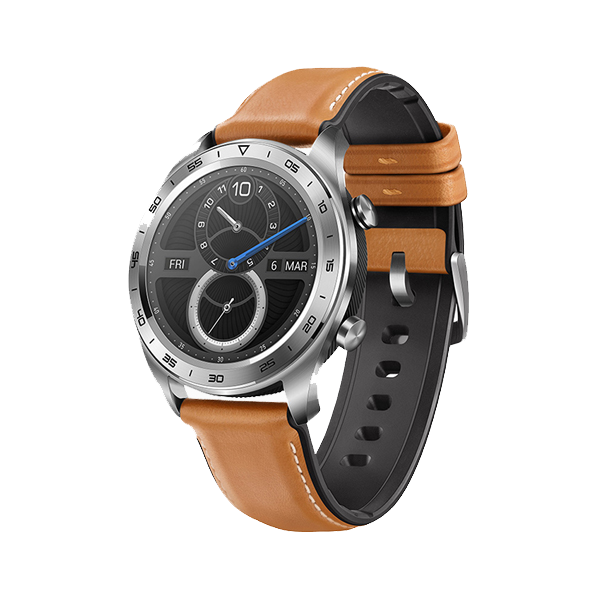
 Smart Watch
Original price was: KSh 78.00.KSh 65.00Current price is: KSh 65.00.
-
 CCTV Camera
KSh 39.00
-
 Laptop
KSh 84.00

A Bitcoin holder wants privacy. They might choose between two distinct paths: running Wasabi Wallet to mix their existing Bitcoin holdings, or switching to Monero entirely. Both claim to protect financial activity from surveillance, but they address different threat models and operate through fundamentally different mechanisms. The distinction matters because choosing incorrectly can leave a user with false confidence in protections that were not designed for their actual risk profile.
Wasabi Wallet applies CoinJoin—a technique that combines multiple Bitcoin transactions into a single batch to obscure the relationship between inputs and outputs on the public ledger. Monero, by contrast, implements mandatory privacy at the protocol level, concealing sender, receiver, and amounts in every transaction by default. Neither approach is universally superior. Each reflects different assumptions about where surveillance happens, what history matters, and how much friction a user will tolerate for the privacy they gain.
How CoinJoin works and what it actually protects
CoinJoin is not encryption. It is a transaction structure in which multiple users each contribute inputs and specify outputs, creating a combined transaction where the relationship between specific inputs and outputs becomes ambiguous. If five users each send one input and specify one output, an observer examining the blockchain cannot definitively know which input funded which output. The ambiguity scales with participation: more users in the mix means more uncertainty for chain analysis.
Wasabi Wallet coordinates CoinJoin rounds through its own server infrastructure and uses zero-knowledge proofs to verify that participants are not cheating during the mixing process. The wallet enforces equal output amounts within a round, typically 0.1 BTC denominations, which further complicates output attribution. A user queues funds for mixing, waits for sufficient participation, and receives mixed outputs in a separate transaction. The process can take minutes to hours depending on demand and coordination timing.
The critical limitation is that CoinJoin only obscures on-chain relationships. It does not hide the fact that a transaction occurred, when it occurred, or the total amount involved. An observer analyzing the Bitcoin ledger can still see that funds moved from one set of addresses to another during a specific time period. If the user had previously exposed address ownership through an exchange deposit, a wallet label, or a payment history, the CoinJoin output might eventually be linked back to them through timing correlation, change address analysis, or subsequent spending patterns.
For example, if a user deposited Bitcoin to their Wasabi Wallet address from a regulated exchange using verified identification, mixed it, and then withdrew the same amount to another exchange account, the mixing provides no protection against the exchange recognizing the same user. CoinJoin disrupts one analytical technique but does not sever the connection between a user’s identity and their Bitcoin. The privacy gain is therefore contextual: it protects against passive ledger analysis but not against a motivated observer with transaction history or timing information.
The ongoing privacy debt of Bitcoin’s public ledger
Every Bitcoin transaction is permanently recorded on a ledger that anyone can download and analyze. This creates a historical privacy debt that no mixing round can fully erase. If a user once received Bitcoin to an address that they labeled, tweeted about, or linked to their identity through past behavior, that history remains visible. A future observer might correlate timing, fees, round sizes, or output characteristics to connect a mixed transaction to the original address.
Wasabi mitigates this through several design choices. Hardware wallet integration with Ledger, Trezor, and Coldcard keeps private keys isolated from the internet-connected device that coordinates mixing. The wallet enforces coin control, allowing users to select specific inputs rather than blindly combining all holdings. Custom node support lets users run their own Bitcoin node or connect to a trusted node rather than relying on Wasabi’s infrastructure for transaction broadcasting.
However, even with perfect implementation, the mixing only affects the input-output relationship within a single round. The ledger still contains earlier transactions that funded those inputs and later transactions that spent the outputs. A sufficiently detailed chain analysis using timing, fee patterns, address clustering, and behavioral heuristics can sometimes reconstruct the likely flow of funds despite the mixing. Academic research has shown that CoinJoin participants are not perfectly anonymous; mixing is a privacy improvement, not a privacy guarantee.
Users evaluating the official Wasabi Wallet site can verify the source code, review security audits, and download installers from trusted channels to avoid malware. That authentication process is critical because a compromised Wasabi installation could undermine the entire privacy architecture. A user can have perfect CoinJoin mixing and still lose privacy if their device is compromised, their recovery phrase is photographed, or their hardware wallet is stolen.
Monero’s approach: Privacy as a protocol requirement, not an option
Monero implements privacy directly in its consensus layer through three mechanisms: ring signatures (which mix inputs so the blockchain cannot determine which was actually spent), stealth addresses (which generate unique public addresses for each transaction so address reuse is not necessary), and RingCT (which hides transaction amounts). Every Monero transaction uses all three by default. There is no mixing round to wait for, no choice to opt out, and no toggle between private and transparent modes.
This mandatory privacy means that a blockchain observer cannot distinguish the sender, receiver, or amount of any transaction without access to the private view key. Monero’s ledger does not reveal sender identity, payment relationships, or transaction sizes in the way that Bitcoin’s transparent ledger does. Ring signatures do not provide perfect anonymity—academic research suggests that ring members can sometimes be narrowed down through analysis of chain timing and transaction patterns—but the baseline protection is substantially higher than Bitcoin with CoinJoin.
The trade-off is that Monero is a separate blockchain with its own ecosystem. A Bitcoin user wanting Monero privacy must first acquire Monero, typically through an exchange. That exchange transaction may be recorded, linked to their identity, and used to connect their Monero activity to a known individual. From that point forward, on-chain analysis of Monero is much harder, but the entry point created a potential bridge between their identity and their holdings.
Monero also faces different regulatory uncertainty. Several exchanges have delisted Monero due to privacy concerns or regulatory pressure, making acquisition and conversion more difficult in certain jurisdictions. Some jurisdictions have explicitly discouraged or restricted privacy coins. A user must evaluate the legal environment in their location before deciding whether Monero adoption is practical. Bitcoin with privacy tools may be more widely supported and more easily integrated with existing financial infrastructure, even if the privacy mechanism is technically weaker.
Timing, chain analysis, and the limits of privacy in observable systems
Both Wasabi and Monero face a fundamental constraint: transactions are observable events. When a user sends Bitcoin through Wasabi or Monero to a regulated exchange, the exchange sees the inbound transaction on its own ledger. The exchange may require that you verify ownership of the sending address or provide proof that the funds were legitimately acquired. At that moment, the mixing or protocol-level privacy becomes irrelevant because the counterparty knows who is sending the funds.
This is why privacy’s real test is not at the transaction level but at the boundaries of the user’s control. If a user acquires Bitcoin through a KYC-compliant exchange, mixes it with Wasabi, and later spends it at another regulated service, the two regulated touchpoints may be connected through timing and amount correlation even if the intermediate mixing step improved privacy. The mixing protects the user’s privacy against observers outside those regulated environments, but it does not protect against a hypothetical future subpoena requiring both exchanges to provide transaction records.
Monero faces the same problem at entry and exit. A user converting fiat to Monero must use an exchange, and a user converting Monero back to fiat must use an exchange. The on-chain privacy gained through Monero’s protocol does not protect the user’s identity at those conversion points. The advantage of Monero is that the intermediate activity—the transactions and movements of funds while held in Monero—remain private even if the overall flow from fiat to Monero to fiat is known.
For long-term holders who acquire privately (through mining, peer-to-peer transfer, or other non-custodial means), Monero provides stronger privacy throughout the holding period. For users with multiple regulated touchpoints, the choice between Wasabi and Monero may matter less than the security of the regulated services themselves. In either case, privacy is only one component of financial security. Device security, backup management, recovery phrase storage, and protection against social engineering often determine outcomes more directly than the choice of wallet or coin.
Privacy wallets vs. privacy coins: operational differences
Wasabi is a Bitcoin wallet that adds a privacy layer through optional mixing. A Bitcoin holder can download Wasabi, maintain their Bitcoin holdings, and selectively mix portions of their balance. The Bitcoin ecosystem remains available to them: they can interact with wallets that do not support mixing, spend Bitcoin at merchants that accept Bitcoin, and integrate with existing Bitcoin infrastructure.
Using a privacy wallet like Wasabi requires understanding CoinJoin mechanics, managing mixing costs, and accepting that privacy is an ongoing process rather than a one-time setting. A user might mix once and believe their Bitcoin is permanently anonymous, but subsequent transactions or behavioral patterns can still link the mixed output back to their identity. The wallet provides tools and coordination, but the user must understand the threat model well enough to use those tools correctly.
Monero, by contrast, is a complete alternative to Bitcoin. Adoption means acquiring Monero, managing Monero addresses, and finding merchants or services that accept Monero payment. The privacy is automatic and does not require user sophistication, but the trade-off is reduced liquidity, fewer supported services, and potential regulatory constraints. A Monero user cannot easily maintain dual holdings across Bitcoin and Monero without managing two separate cryptocurrencies and two separate wallet recovery processes.
The operational friction often determines practical privacy adoption. If Wasabi is easier to use and understand, more Bitcoin holders will use it despite its technical limitations. If regulatory restrictions make Monero acquisition difficult or risky in a user’s jurisdiction, they may accept Bitcoin’s lower privacy baseline rather than face that friction. Privacy is always a trade-off with utility, and the choice between Wasabi’s optional privacy and Monero’s mandatory privacy reflects different judgments about that balance.
Which approach fits which risk model
A Bitcoin holder living in a country with capital controls or currency instability might prioritize Bitcoin adoption and liquidity over privacy, accepting that Wasabi’s CoinJoin provides some protection against casual chain analysis. A person prioritizing protection from wealthy individuals or businesses conducting forensic analysis might choose Monero for its stronger protocol-level privacy. A journalist protecting source confidentiality, a dissident in an oppressive jurisdiction, or a user facing targeted surveillance would likely find Monero’s mandatory privacy more aligned with their threat model than Wasabi’s optional mixing.
Conversely, a Bitcoin developer, a user deeply embedded in the Bitcoin ecosystem, or someone who needs to convert to fiat regularly might prefer Wasabi because it preserves Bitcoin liquidity while offering some privacy improvement. A user who has already been KYC-identified during an earlier Bitcoin purchase might reason that mixing provides additional privacy against third parties even if the regulated entities already know their identity. The rational choice depends on whether the user’s actual threat is passive chain analysis, motivated law enforcement investigation, targeted surveillance, or some combination.
The most honest assessment is that neither Wasabi nor Monero offers absolute anonymity. Wasabi improves privacy against passive ledger analysis but leaves users exposed to timing correlation, exchange records, and historical linking. Monero provides stronger protocol-level privacy but does not protect against regulated entry and exit points and faces uncertain regulatory futures in some jurisdictions. The real security decision is not simply choosing one tool, but understanding the limits of that tool and designing around them.
Device security and implementation matter more than the protocol choice
A user running Wasabi on a device infected with malware might not gain any privacy benefit despite using a technically sound wallet. Similarly, a Monero user whose recovery phrase is stored in cloud notes has compromised their security regardless of how strong Monero’s protocol privacy is. The choice between a privacy wallet like Wasabi and a privacy coin like Monero is secondary to the choice between competent device security and careless practices.
Both Wasabi and serious Monero wallets support hardware integration: Wasabi directly, and Monero indirectly through hardware wallets running Monero software. Using a hardware device for key management isolates the private keys from an internet-connected computer, reducing the attack surface. But even hardware wallet integration cannot protect against social engineering, backup exposure, or a user spending from a corrupted change address.
The practical security framework for either choice includes: verifying software installation through checksums and digital signatures, using a dedicated device or air-gapped signing setup for high-value holdings, storing recovery phrases offline in a secure location, enabling two-factor authentication where available, and testing the recovery process before it is needed in an emergency. These measures apply regardless of whether the user chooses Wasabi for mixing or Monero for protocol-level privacy.
Users exploring privacy tools should also recognize that privacy and security are related but distinct. A wallet can be secure (protecting against theft and key compromise) without being private (protecting against ledger analysis and observer inference). Both matter. A user with a perfectly private transaction history but a stolen private key has lost their funds. A user with an unhackable hardware wallet but a transaction pattern that deanonymizes them has compromised their financial privacy. The complete picture requires attention to both dimensions.
The future of Bitcoin privacy and the role of optional tools
Bitcoin’s privacy limitations are unlikely to disappear, and so optional privacy tools like Wasabi will continue to serve users who want to improve their privacy without switching coins. Improvements to CoinJoin efficiency, larger mixing rounds, and better coordination mechanisms could make mixing faster and cheaper, increasing adoption. Alternatively, emerging techniques such as Silent Payments and PayJoin could provide complementary privacy improvements to users who do not want to wait for CoinJoin rounds or pay mixing fees.
Monero’s future depends on regulatory developments and continued technical refinement. If privacy coins face increasing regulatory restriction, Monero’s adoption may stagnate. If privacy becomes more valued by users and protocols improve further, Monero could attract more users despite liquidity constraints. The regulatory environment is not uniform: Monero remains listed on some exchanges and delisted from others, creating a fragmented landscape that affects usability.
The broader lesson is that privacy is not a fixed property of a tool or coin. It is a process that depends on protocol design, wallet implementation, user behavior, regulatory enforcement, and counterparty knowledge. Wasabi improves privacy for a Bitcoin user who understands its limitations and uses it correctly. Monero provides stronger baseline privacy for users willing to adopt a separate cryptocurrency. Neither replaces competent device security, recovery phrase protection, or judgment about when and where to convert between Bitcoin and fiat currency.
For a user deciding between these approaches, the honest question is not which tool is most private in the abstract. It is which approach aligns with the user’s actual threat model, regulatory environment, technical comfort level, and willingness to accept friction or cost. A user who cannot execute Wasabi’s mixing workflow correctly might be better served by the automatic privacy of Monero. A user deeply embedded in Bitcoin’s ecosystem might reasonably accept Wasabi’s limitations. The right choice depends on the specific situation, not on a universal ranking of privacy strength.
Frequently asked questions
Does using Wasabi Wallet make my Bitcoin transactions completely anonymous?
No. CoinJoin improves privacy by obscuring the relationship between inputs and outputs within a mixing round, but it does not erase the transaction from the public ledger or protect against timing correlation, exchange records, or behavioral analysis. If your Bitcoin was previously linked to your identity through an exchange or public disclosure, mixing does not sever that link. Privacy is improved, not guaranteed.
Why would I choose Bitcoin with Wasabi instead of switching to Monero?
Bitcoin has greater liquidity, wider merchant acceptance, and more developed infrastructure than Monero. A user might prefer Wasabi to preserve Bitcoin compatibility while gaining some privacy improvement. Additionally, Monero faces regulatory uncertainty and is delisted from some exchanges, making acquisition and conversion more difficult in certain jurisdictions. The choice depends on your specific risk model and practical constraints, not solely on protocol-level privacy strength.
Does Monero protect me from KYC exchanges at entry and exit points?
No. Monero’s protocol-level privacy protects your on-chain transactions and holdings while they remain in Monero, but it does not protect the exchange records when you convert fiat to Monero or Monero back to fiat. If you must use a KYC-compliant exchange at both endpoints, those regulated entities will know your identity. Monero’s privacy advantage lies in the intermediate period when you hold and transact Monero itself.

Know Us

Neque viverra justo nec ultrices dui sapien eget. Gravida cum sociis natoque penatibus. Imperdiet proin fermentum leo vel orci porta non
Read More


Product Showcase


Leave a Reply