

Popular
-
 Speaker Stands
Original price was: KSh 33.00.KSh 22.00Current price is: KSh 22.00.
Speaker Stands
Original price was: KSh 33.00.KSh 22.00Current price is: KSh 22.00.
-
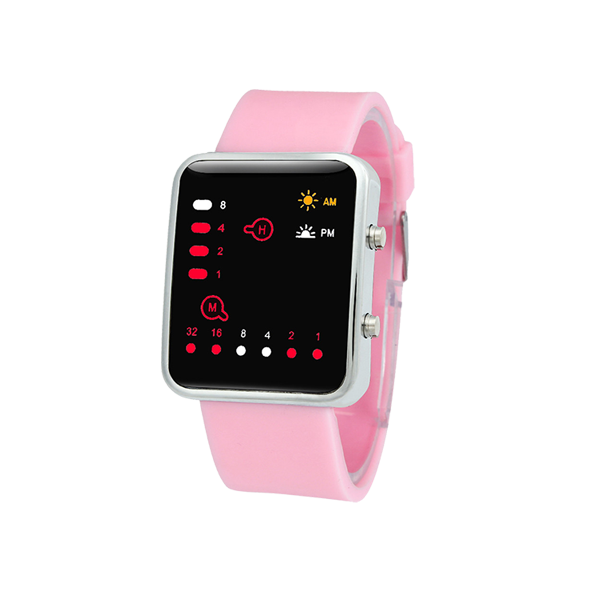 Smart Watch - Yellow
KSh 50.00
Smart Watch - Yellow
KSh 50.00
-
 Smart Watch
Original price was: KSh 78.00.KSh 65.00Current price is: KSh 65.00.
Smart Watch
Original price was: KSh 78.00.KSh 65.00Current price is: KSh 65.00.
-
 CCTV Camera
KSh 39.00
CCTV Camera
KSh 39.00
-
 Laptop
KSh 84.00
Laptop
KSh 84.00

A professional derivatives trader faces a persistent problem on centralized exchanges: the order book displayed on screen may not reflect actual liquidity. Large orders vanish seconds before execution. Bids and asks that appeared deep suddenly withdraw. The patterns suggest intentional layering—stacking orders to create a false appearance of demand or supply—or spoofing, where traders place orders they never intend to fill. Proving manipulation is difficult because the exchange controls the data. Regulatory investigations may take months, and by then capital has already moved elsewhere based on a distorted market signal.
Hyperliquid removes that information asymmetry by building a fully transparent, on-chain order book on a Layer 1 blockchain. Every order, cancellation, and fill is recorded in the ledger where anyone can verify it. No hidden order queues, no privileged data feeds sold to market makers first, no opaque matching engine. The consequence is that traditional market manipulation tactics fail. An order cannot vanish from the visible book because the blockchain is the visible book. Liquidity cannot be falsely amplified because every token is accounted for in a verifiable state. The result reshapes how traders evaluate depth, execute large positions, and assess counterparty risk.
How centralized exchanges enable hidden order flow and manufactured depth
A typical CEX operates a matching engine that sits between users and the published market. The engine knows the full order queue—visible and hidden orders alike—before executing any trade. This architecture was designed for speed and efficiency on centralized infrastructure, but it creates an information advantage that the exchange can exploit or sell. Market makers receive latency advantages, allowing their orders to execute before retail traders see a price move. Dark pools or iceberg orders hide the true size of positions. The exchange itself can see all pending orders and theoretically could front-run, although regulatory frameworks in major markets now explicitly prohibit that practice for the exchange entity.
The published depth chart—showing the cumulative liquidity available at each price level—often reflects an incomplete view. An order book with apparent $10 million of buy liquidity 1% below the mid-price may include $7 million in hidden orders that only reveal themselves after a user starts to sell into the visible portion. Spoofing exploits this lag: a trader places a large sell order, watches the price move down, cancels the sell order before it fills, and profits if they held a long position. The canceled order never consumed any liquidity; it simply moved the price temporarily. Layering chains multiple orders at progressively deeper levels to create a visual wall of resistance or support, then cancels them in sequence as price approaches, funneling trading flow through a specific route where the manipulator profits.
Wash trading—executing both sides of a trade between accounts controlled by the same entity—can inflate trading volume without changing prices, creating a false sense of liquidity and activity that attracts other traders. Because the exchange controls both the matching and the data published, it can make these trades appear legitimate. Proving manipulation after the fact requires statistical analysis, regulatory subpoenas, or cooperation from the exchange. By that time, the price discovery process has already been corrupted.
The financial impact compounds. A trader expecting to sell $500,000 into the displayed $2 million of depth may find that liquidity evaporates as soon as their first market order hits the book, forcing them to execute at progressively worse prices. High-frequency traders can exploit these information gaps by placing and canceling orders faster than slower traders can react. Market makers who benefit from this information advantage can widen spreads further, confident that retail traders cannot identify the true depth or react quickly enough to exploit it.
On-chain order books eliminate the visibility gap
An on-chain order book reverses the information structure. Instead of an exchange maintaining a centralized database and publishing a view of it, every order exists as a verifiable state entry on the blockchain. When a user places a limit order to buy 1 bitcoin at $40,000, that order becomes part of the immutable ledger. When a market order fills against it, the fill becomes a transaction that any observer can inspect. There is no hidden queue. There is no “almost filled” order hiding behind a façade of liquidity. The blockchain is the single source of truth, and truth is public.
This architecture eliminates spoofing entirely. An order on a blockchain must either be filled or explicitly canceled. There is no meaningful distinction between a “fake” order and a “real” one; both are equally binding and equally visible. A trader could place an order, then immediately cancel it before it matches, but the cancellation is itself a transaction that observers see. A pattern of placing and canceling without meaningful fills becomes visible in the transaction history. Market manipulation becomes statistical analysis applied to public data rather than a claim that must be taken on faith or proven through regulatory enforcement.
Layering fails similarly. Each order in the stack is an independent, visible commitment. Building a wall of orders to influence price requires posting orders that remain on the chain. If they are canceled before filling, the cancellations are recorded. If they fill, the fills are recorded. An observer analyzing the order flow can ask straightforward questions: which accounts placed orders, when, how long they were posted, what percentage filled, and what happened to the canceled ones. Patterns that suggest manipulation become detectable through automated analysis of public data rather than hidden through opacity.
Wash trading—executing trades between controlled accounts—is similarly exposed. Every trade on an on-chain order book is cryptographically signed by the parties who executed it. If two accounts are controlled by the same entity and they trade large volumes against each other while the true market moves in a different direction, that pattern is auditable. A genuine market maker buying and selling in response to actual demand looks different from an entity creating artificial volume. This does not make manipulation impossible—a trader could still move prices through coordinated positions—but it makes hidden manipulation impossible. The activity is visible; whether it is illegal depends on regulatory jurisdiction, not on technical concealment.
Real-time market data and transparency advantages for informed traders
Professional traders have long relied on premium market data feeds that give them earlier access to information than public sources. Exchanges charge for such feeds, creating a tiered structure where the fastest observers get the most accurate information first. On an on-chain order book, that premium is eliminated at the protocol level. Every participant with access to a blockchain node sees the same order book state at the same confirmation time. The information is not faster or slower based on payment; it is identical to all observers who sync the chain.
This uniformity reshapes how traders evaluate liquidity depth. Instead of trusting a published figure from a single exchange, traders can query the actual orders on the blockchain and assess depth themselves. Real-time market data becomes fully auditable rather than merely reported. A trader can ask: how deep is the book really at this price level right now? What orders sit in it? Which have been sitting longest? What percentage of the visible depth is from established market makers versus fresh retail orders? These questions have definitive answers because the data exists on a distributed ledger.
Depth analysis becomes more refined because the data is not aggregated or filtered by the exchange. A trader can identify if a particular liquidity provider tends to offer deep liquidity or if they withdraw quickly as prices move. They can observe whether large orders are being placed in anticipation of news or whether they appear reactively. They can build order-flow analysis systems that watch for patterns—accumulation of sell orders before price drops, or clusters of buy orders from specific accounts—and act on real information rather than a curated view.
The advanced analytics tools available on Hyperliquid DEX make this analysis accessible to a broader audience. Traders no longer need to run their own blockchain archive node and parse raw transaction data to understand order flow. The platform provides visualization, filtering, and search capabilities that let professional and high-frequency traders extract insights from the complete, transparent order book without needing to build custom infrastructure.
CEX performance parity with decentralized execution and settlement
The conventional trade-off assumed that centralized exchanges were fast because they operated on private servers with optimized matching engines, while decentralized exchanges were slow because they relied on blockchain settlement. Hyperliquid challenges that assumption by building a Layer 1 blockchain optimized for matching speed. The blockchain executes and settles orders with latency that competes with centralized exchanges—measured in hundreds of milliseconds—while maintaining the transparency advantage of on-chain settlement.
This performance parity matters because it removes the excuse for choosing opacity. A trader cannot argue that they accept opaque CEX order books in exchange for better execution speed when a transparent alternative executes just as fast. If anything, the transparency creates advantages: a trader can route more of their volume through the transparent system and reduce their dependence on CEX liquidity, knowing they are not being front-run or layered by the matching engine.
CEX performance and DEX transparency are no longer mutually exclusive. The result is that traders evaluating liquidity can make a more honest comparison. When a centralized exchange publishes a depth chart, a trader can cross-reference it against the real on-chain data. Discrepancies become obvious. If the CEX claims $5 million of depth at a price level but the actual filled volume in recent trades was much lower, the trader knows the depth estimate is overstated. If the on-chain alternative shows consistent, deep liquidity that remains even during volatile movement, the trader has auditable evidence of superior execution quality.
Perpetual trading on Hyperliquid carries zero gas fees because execution happens on the Layer 1 chain itself rather than requiring expensive interactions with Ethereum or another chain. This cost structure directly benefits high-frequency traders and portfolio managers who execute hundreds or thousands of positions daily. Cumulative savings from zero-fee trading compound significantly over time, and the ability to avoid fees also removes a hidden incentive to concentrate positions or avoid rebalancing.
Spoofing, layering, and wash trading become forensically detectable
The shift to on-chain transparency transforms market manipulation from a hidden tactic into a forensically detectable pattern. A trader suspected of spoofing can no longer claim they simply changed their mind; the blockchain shows exactly when the order was placed, how long it remained, what prices moved during that time, and when it was canceled. Regulators or market surveillance systems can analyze this data without needing the exchange’s cooperation or testimony from traders. The evidence is immutable and public.
Layering similarly becomes visible in a way that is difficult to hide. If a trader places ten sell orders at progressively lower prices, watches the price move down in response, then cancels all ten orders before any fill, the blockchain will show this pattern clearly. An observer can see the order IDs, placement times, cancellation times, and the price action between placement and cancellation. Statistical models can identify whether such patterns occur with the frequency expected by chance or whether they suggest intentional manipulation.
Wash trading becomes detectable through transaction graph analysis. If two accounts trade consistently against each other while the market moves away from their traded prices, forensic analysis can identify them as potentially coordinated. The signed transactions prove which accounts executed each trade, and the timing and pricing become part of a public record that investigators can subpoena without requiring the exchange’s records. This does not make all coordinated trading illegal—legitimate market makers will trade against each other in a real market—but it removes the ability to hide such trading or claim it never occurred.
The psychological effect is also significant. A trader considering spoofing knows that the order book is transparent and that their actions will be publicly recorded. The cost of being caught is higher because the evidence is undeniable. This shifts the risk-reward calculation. Even if the trader believes they can profit from moving prices temporarily, they must weigh that against the certainty that the tactic is visible and can be forensically analyzed later. The same applies to layering and wash trading. Transparency does not make manipulation impossible, but it makes it risky in a way that opacity did not.
How traders verify order book authenticity and detect manipulation in real time
A trader using Hyperliquid can verify order book depth by running a node or querying a public RPC endpoint. They can pull the current state of the order book and check it against the displayed depth. If the platform shows $1 million of liquidity at a price level, the trader can confirm that exactly $1 million in orders actually exists in the verifiable state. This is not possible on centralized exchanges; the trader must trust the published figure.
Real-time monitoring becomes practical because the underlying data is public and auditable. A trader can set up alert systems that watch for sudden order placement, large cancellations, or patterns that suggest manipulation. If a large buy order suddenly appears and then cancels before filling when the price starts to move in the opposite direction, an automated system can flag this for review. If an account repeatedly places and cancels orders at specific price levels with a pattern that appears non-random, the system can highlight it.
The on-chain order book also enables transparent slippage measurement. A trader submitting a market order knows exactly what liquidity they will consume because they can see the standing orders. If they expect to buy 10 bitcoins and the order book shows exactly 15 bitcoins available from $40,000 to $40,500, they can calculate their expected slippage. On a CEX, the actual execution may differ from the estimate because hidden orders were not visible. On an on-chain book, the execution matches the visible depth.
This transparency also allows traders to compare execution quality across different order types and times. A trader can analyze their historical fills and compare the actual price they received to the mid-price at the time of execution. They can identify patterns in their slippage and correlate them with market conditions, order size, and time of day. This analytical capability is available to all traders equally because the data is public. A small trader with minimal resources can run these analyses just as effectively as a well-funded operation with premium data feeds.
The implications for market microstructure and price discovery
Traditional microstructure theory assumes that hidden order information creates a source of trading profit. A high-frequency trader with access to order-flow information ahead of others can profit by trading against that flow or front-running it. This advantage disappears when all order flow is visible simultaneously to all participants. The result is that trading profits become harder to extract from information asymmetry and easier to extract from legitimate market making, arbitrage, or directional analysis.
Price discovery—the process by which markets aggregate information from all participants and move toward fair value—should theoretically improve with full transparency. When all market participants see the same orders and the same order flow, they can all process the information equally. There is no hidden order that one trader knows about and others do not. This levels the information playing field and should result in more efficient prices that reflect all available information more quickly.
However, transparency can also reduce the incentive for informed traders to participate. On a traditional CEX, a trader with special information might place a large order in the hope that the order size itself provides information that moves the price in their favor before they execute. On a fully transparent market, the order is immediately visible, so the trader cannot profit from being the first to reveal it. This might reduce the willingness of certain traders to contribute to price discovery, potentially flattening the efficiency gain.
In practice, Hyperliquid’s architecture seems to balance these effects by maintaining CEX-competitive performance. If traders can execute quickly and efficiently despite the transparency, the pool of liquidity providers should remain deep. The platform’s $2 trillion in cumulative volume and 100+ trading pairs suggests that the transparency advantage for traders who value it outweighs any deterrent to traditional market makers who rely on information asymmetry. The competition between transparent and opaque markets will ultimately determine which structure dominates.
Regulatory and compliance clarity through immutable market records
Regulators examining market conduct have traditionally relied on exchanges to provide order books, trade records, and communication logs. This creates a dependency on the exchange’s accuracy and cooperation. If an exchange is uncooperative or if its records are incomplete or corrupted, regulatory investigations face practical obstacles. Subpoenaed records may not match market observations, and determining what actually occurred requires extensive forensic work.
With an on-chain order book, the regulatory record is built into the ledger itself. No subpoena is required to see the orders that were placed and when. No testimony about “what the system showed” is needed because the system is transparent to all observers. Regulators can download the blockchain, analyze the order flow, and identify patterns that suggest manipulation. The analysis is reproducible; multiple regulators can independently reach the same conclusions about the data.
This transparency also benefits compliant traders and market makers. A legitimate operation running on an on-chain order book has nothing to hide. Their order placements, cancellations, and fills are all public and auditable. This makes it easier for them to demonstrate good faith if their conduct is questioned. Instead of relying on their own records or the exchange’s testimony, they can point to the blockchain and let the immutable data speak for itself.
Platforms like Hyperliquid that operate with zero trading fees also remove another layer of potential manipulation. On exchanges with trading fees, an exchange might have an incentive to encourage excessive trading, spreads, or volatility to increase fee volume. With zero fees, that incentive disappears. The exchange benefits from having legitimate, active traders and market makers, but not from manufactured activity or price distortion that would damage trader trust.
Frequently asked questions
How does an on-chain order book prevent spoofing that a centralized exchange cannot?
Spoofing relies on placing orders that look real but are canceled before filling, using the temporary price move to profit from another position. On an on-chain order book, every order and every cancellation is recorded on the blockchain. An observer can see the exact placement time, cancellation time, and price movement that occurred between them. This pattern becomes forensically detectable, making the tactic too risky. On a centralized exchange, the hidden queue means observers cannot verify whether orders were real or if they were canceled before anyone could have traded against them.
Can traders really verify the depth shown on Hyperliquid by checking the blockchain themselves?
Yes. Any trader with access to a Hyperliquid node or public RPC endpoint can query the current state of the order book and verify that the displayed depth matches the actual standing orders. They can also pull historical order data to analyze order flow, cancel patterns, and pricing. This capability is not available on centralized exchanges, where traders must trust the published depth.
Does transparency in the order book mean that market making is no longer profitable?
Not necessarily. Market makers profit from providing liquidity, earning the bid-ask spread and from informed trading. Transparency removes some arbitrage opportunities based on hidden information, but it does not eliminate the fundamental role of liquidity provision. Hyperliquid’s deep liquidity and high trading volume suggest that market makers find it profitable to participate despite the transparency.

Know Us

Neque viverra justo nec ultrices dui sapien eget. Gravida cum sociis natoque penatibus. Imperdiet proin fermentum leo vel orci porta non
Read More


Product Showcase




Leave a Reply